Notes and links - 14th June 2026


Is this true?: "attention-harvesting advertising is the only software business model that works at scale for consumer services"
From: "This reality about the consumer market is a lesson that Silicon Valley has to re-learn every decade or so. Consider Dropbox, whose founder, Drew Houston, is in the process of stepping down. Dropbox was a category-defining product that had a viral hook — if someone signed up with your referral code, you got more storage — and grew extremely fast amongst consumers; the company then spent too long trying to actually build a business in the consumer space, before finally realizing that the only way to make money with what was ultimately a productivity product was by selling to enterprise.
The reason is obvious when you think about it: enterprises are paying for their employees’ time, so of course they are willing to pay for tools that make those employees more productive; consumers, on the other hand, are mostly looking to waste time, which is why attention-harvesting advertising is the only software business model that works at scale for consumer services. The fact that Silicon Valley forgets this is downstream from Silicon Valley being a bubble; normal people aren’t looking for agents to buy them tickets to a concert.
Still, the bubble was strong enough to convince OpenAI to make the exact same mistake Dropbox did: the company somehow convinced itself that it could make enough money selling subscriptions to consumers; Anthropic, meanwhile, realized that it was enterprises who were willing to pay for AI’s massive productivity benefits, even as OpenAI failed to capitalize on their consumer market penetration by refusing to build an advertising product."
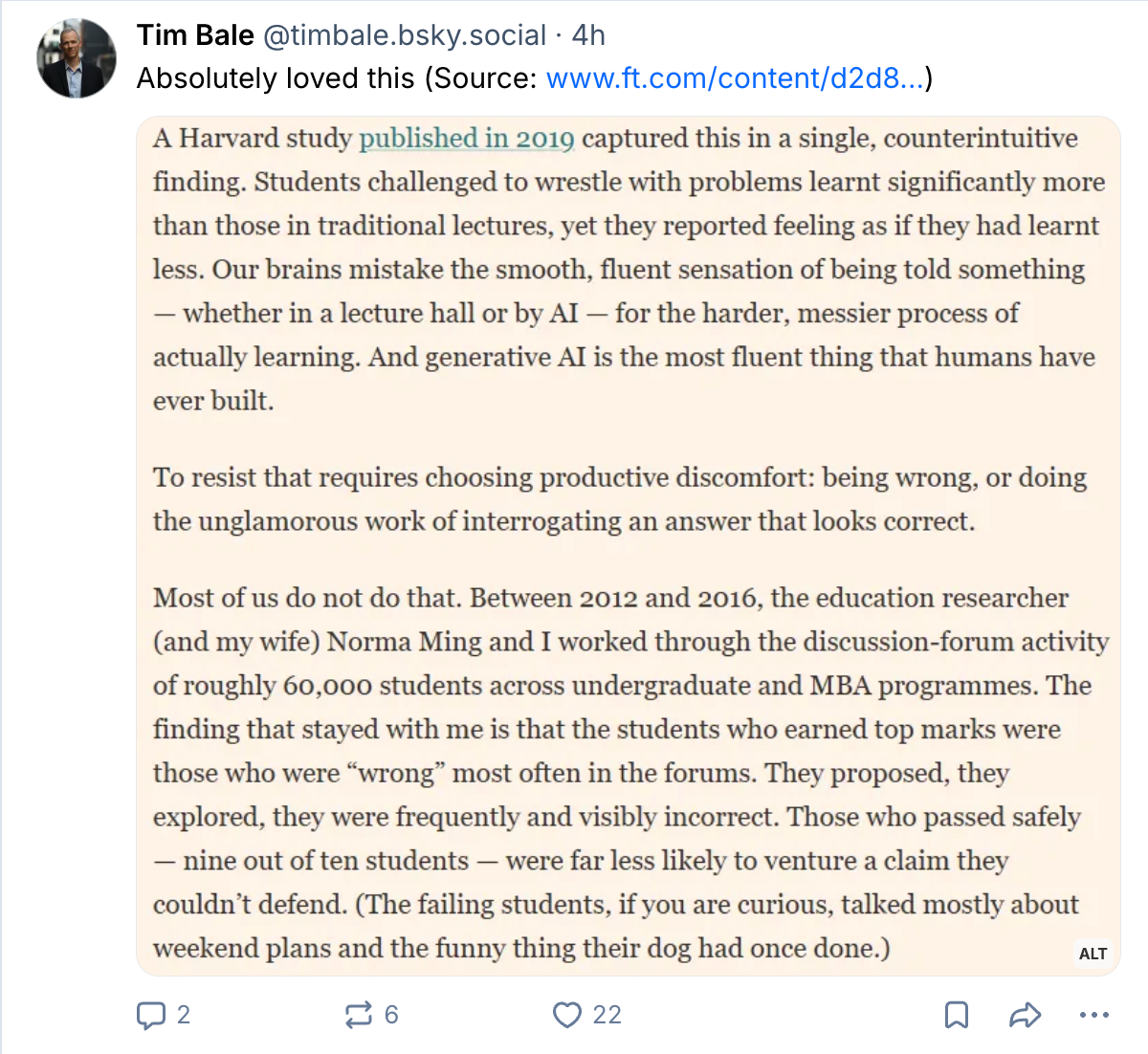
Work works:
 Tim Bale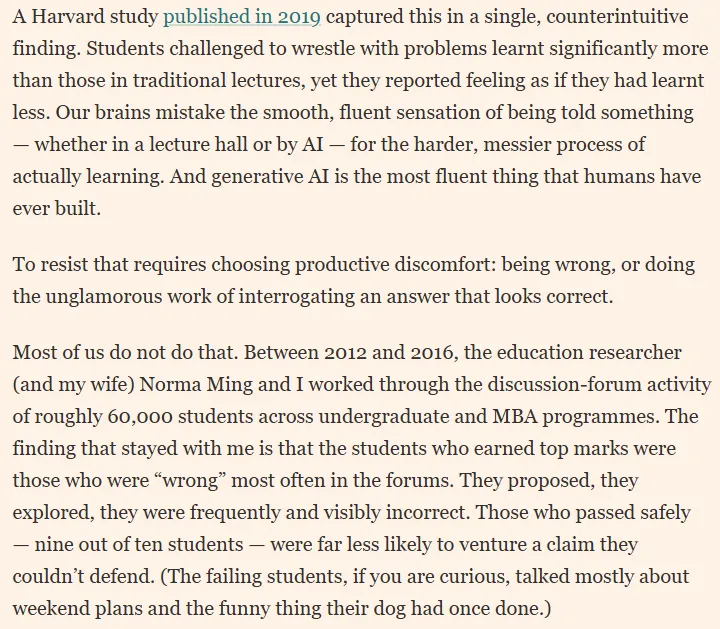
Denise alerts us to Jane Dallaway's fantastic blog. RSS!
"As digital distribution spreads to more households in more countries, the biggest stars are a more varied bunch than in the past. Spotify’s global top 50 last year included songs in 16 languages, more than double the number in 2020.The Danes are not the only ones marching to their own beat. In 2023 Will Page and Chris Dalla Riva noted in a London School of Economics paper that a number of European countries including France, Germany, Italy and Poland had seen rising domestic shares of their top tens in the preceding decade. Since then the phenomenon seems to have spread. Mr Page, formerly chief economist at Spotify, finds that 55% of streams of songs in Sweden’s top 20 last year were in Swedish, up from 29% in 2019. Norway’s figure rose from 13% to 38% in the same period."
"..viewers are watching less American entertainment. American shows’ share of global demand for TV series fell from 51% in 2022 to 42% last year, calculates Parrot Analytics, which measures demand based on consumption, search and social interactions. In countries big enough to attract commissions from streamers, local consumption is rising. Digital i, a data firm, finds that on Netflix and Amazon Prime, local content’s share of viewership rose from 28% in 2021 to 39% in 2025 in Spain, and from 14% to 20% in Britain. By its measure nine of Netflix’s ten most-watched shows or movies in Japan and South Korea last year were local fare."